 УЗ
УЗ
 РУ
РУ
 EN
EN
 العربية
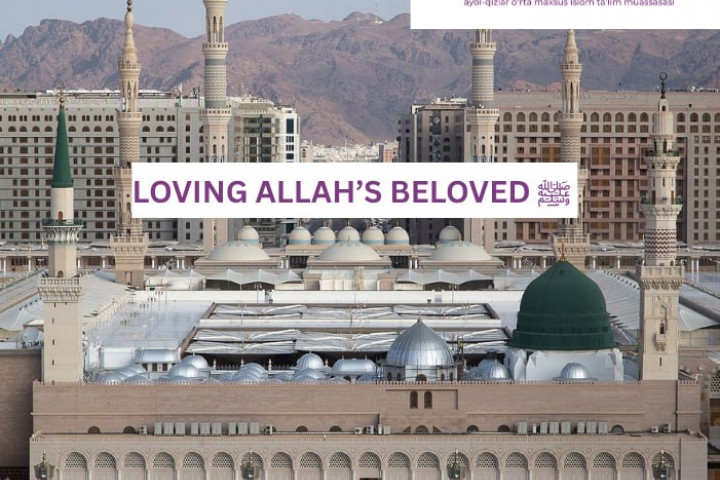
Loving Allah’s Belovedﷺ
His arrival marked a new dawn for the entire universe after a long and dark night: the noblest of Allah’s creation, the leader ofHis creation, and the Seal of His Messengers. None among Allah’s servants is equal to him. He won hearts through his noble character, captivated souls through his love, and made humanity long for him with deep yearning. He is Muhammad ibn Abdullah:Allah’s final and most beloved Messenger, sent as a mercy to all mankind until the Last Day. He was the best of the best. His worship was the finest. His characterand dealings with others were the most excellent. His family relations were the best. His leadership was the most outstanding.
His Iman and Love for Allah
He ﷺ was the most God-fearing, most obedient, and most humble servant of Allah. No one understood Allah like he ﷺ did. His iman and closeness to Allah were completely firm, never shaking even for a moment. His sincerity, hope, and trust in Allah never bent or broke. His worship, dhikr, and dua were on a level beyond ordinary words. In the Night Journey, he ﷺ rose to heights where no one else had ever reached — not even Jibril alayhis salam — and he saw from his Lord whatno human had
ever seen before. In thatjourney, he was given salah, which became his deepest joy. Nothing made him happier than speaking closely with Allah, his Beloved. His recitation was so beautiful that ittouched hearts. He would stand the whole night in prayer, reading, bowing, and prostrating for so long that even one of his companions, who once joined him, thought about leaving from tiredness. Yet at the same time, out of mercy, when he ﷺ heard a baby crying during group prayer, he would make the prayer shorter so people would not be harmed. He ﷺ completely changed society. He brought people out of darkness into light, showing them the truth and the light of iman. He lived in perfect servitude to Allah. He was full of gratitude in every situation. He was shy not only before people but also in front of his Lord. He loved Allah deeply, and Allah loved him deeply in return.
The Messenger: A Grateful Servant
Heﷺsuffered many difficulties throughout his life, yet he remained patient and steadfast. As a young child, he never met his father. At the age of six, he lost his mother, and soon after, hisgrandfather. When he was chosen to be Allah’s Messenger, his own people opposed him. He was mocked, insulted, and faced severe hardship in Makkah. He witnessed his companions being persecuted for their faith. He lost his beloved wife Khadījah andhis uncle and protector, Abu Talib, within the same year, and he was eventually forced to leave his beloved birthplace. His companions also suffered greatly, and many were killed in battles. In the battle of Uhud, his uncleHamzah rodiyallohu anhu, was
martyred. The Prophetﷺhimself was injured in that battle. He lived through the sorrow of losing most of his children during his lifetime. Yet none of these trials made him bitter. Instead, he remained the most compassionate, patient, and humble of all people. He never gave up his mission and continued to worship his Lord with patience and gratitude. When reminded that Allah had forgiven him, he ﷺ said: “Should I not be a grateful servant?"
The Messenger: The Murabbi
There was no one more loving and kinder to children thanhe. This is testified by Anas b. Mālik (raḍiy Allāhu ʿ anhu), who served the Prophet ﷺ for ten years from when he was a young boy. Throughout this time, the Prophet ﷺ never cursed him, neverspoke to him harshly, and never asked him “Why did you do so?” or “Why didn’t you do so?”He was the best teacher. He was sent as a mercy for the world. Once, a Bedouin urinated in the masjid. The Companions began to scold him, but the Prophet ﷺ instructed them to leave him and let him finish. When he finished, he ﷺ kindly explainedto him that this was not appropriate for the masjid. The Bedouin later said that the Prophet ﷺ neither cursed, scolded, nor hit him.
The Messenger & His Love for The Ummah
He ﷺwould always smile, yet he deeply cared for his ummah. He ﷺsaid: “I wish to meet my brothers.” The Companions
Radiyallohu anhu said: “Are we not your brothers?” He ﷺ replied: “You are my Companions, but my brothers are those who have notyet come into the world.”He ﷺ said that he would meet hisummah at the Hawd (the blessed fountain) on the Day of Judgment. He ﷺ will also be granted the intercession (shafāʿ ah) for his ummah on the Day of Judgment.
The Meaning of Salawat on the Prophet ﷺ
ʿAbd al-Raḥmān b. Abī Laylā said, “Kaʿ b b. ʿ Ujrah met me and said, (Shall I not give you a gift I received from the Prophet ﷺ?’ I replied, (Yes, of course, gift it to me.’ So he said, (We asked Allah’s Messenger ﷺ, “O Messenger of Allah, how should we send ṣalāh upon you, the members of the family, for Allah has taught us how to send salām upon you?” He ﷺ replied: “Say:
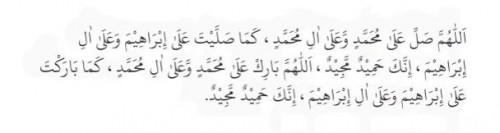
O Allah, honour and have mercy upon Muḥammad and the family of Muḥammad as You have honoured and had mercy upon Ibrahim and the family of Ibrahim, indeed, You are the MostPraiseworthy, the Most Glorious. O Allah, bless Muḥammad and the family of Muḥammad as You have blessed Ibrahim and the family of Ibrahim.Indeed, You are the Most Praiseworthy, the Most Glorious (Bukhari).
Do We Truly Love Our Prophet ﷺ?
Sometimes we say we love the Prophet ﷺ, but our actions don’t show it. Loving him means we follow him, respect him, and try to live as he lived in every part of our lives. It also means he is always in our thoughts, and his words guide what we do. The Prophet ﷺ left this world, but he left us the Qur’an and his Sunnah. We should hold on to them and continue his way. We should remember him and send a lot of salawat on him. Every time we do salawat, Allah rewards us, and it is also a way of showing love to him. Even though we didn’t meet him in this world, we still have hope for his du’a and intercession. O Allah, make our love for Your Prophet ﷺ real and true. Help us obey him. Let his Sunnah light up our hearts, our homes, and our lives. Give us his intercession, let us drink from his hands at the Hawd, andbring us together with him in Jannah al-Firdaws.
By Student Fotima Omonova
References
Shaykh Muhammad Sadiq Muhammad Yusuf. (2019). "Treasures of Manners ·" Hilol Nashr, Tashkent.
Muhammad ibn Ismail al-Bukhari. (2014). "Sahih al-Bukhari". Hilol Nashr, Tashkent.
Alixonto‘ra Sog‘uniy. (2021). "The History of Muhammad ﷺ" Munir. Tashkent.
Другие новости

Наши контакты
| Телефон: | +998 (71) 248-47-52 |
| E-mail: | xadichai-kubro@umail.uz |
| Адрес: | Toshkent shahar, Olmazor tumani, Fayziobod ko'chasi, 1-uy |